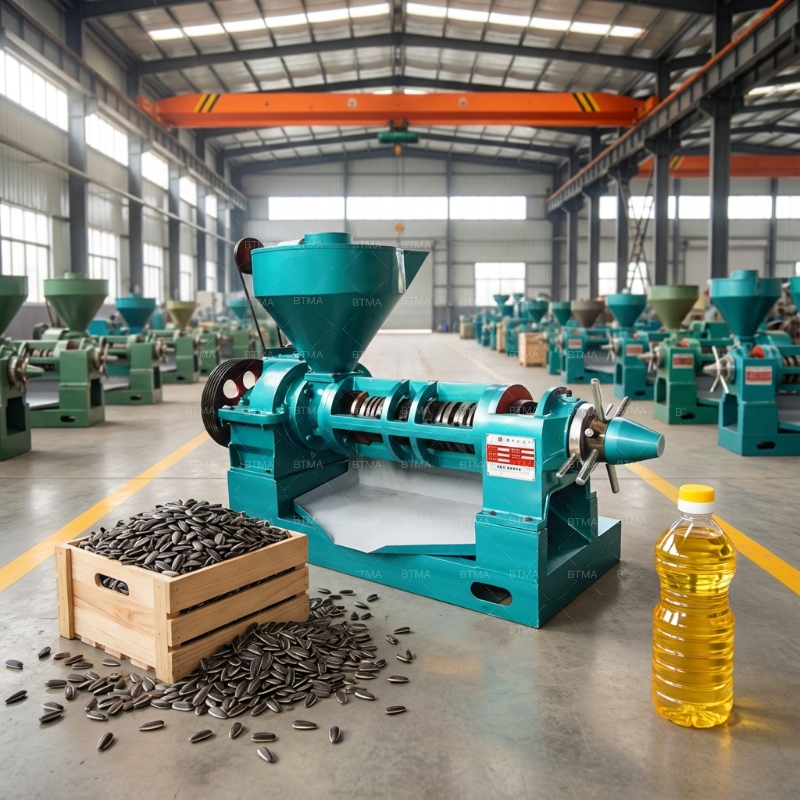
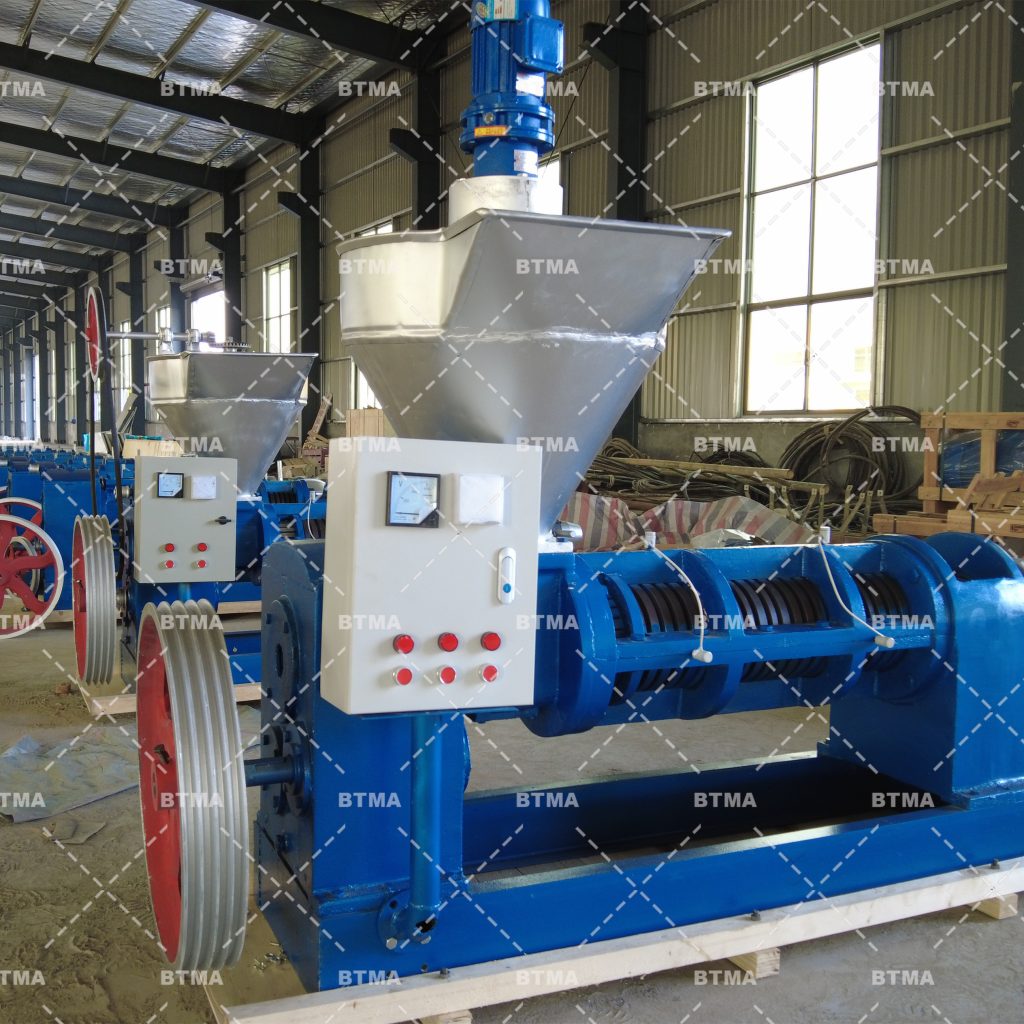
Why Doesn’t the Same Oil Press Always Produce the Same Oil Yield?
Oil yield is not determined by the oil press machine alone.
Even when the same machine is used, the amount of oil extracted can change when the raw material, moisture, preparation method or operating conditions change.
This is why rated machine capacity and actual oil yield should be treated as different measurements.
A machine may have a specific processing capacity, but the amount of oil recovered depends on the characteristics of the material entering the pressing chamber and how the equipment is operated.
1. Raw Material Oil Content
The natural oil content of the seed is one of the most important factors.
Different crops contain different amounts of oil, and even different varieties of the same crop can have different characteristics.
Fresh, properly stored oilseeds can generally provide more predictable pressing results than raw materials that have deteriorated during long-term storage.
Therefore, comparing oil yield between different crops without considering their natural oil content can be misleading.
2. Moisture Content
Moisture has a significant effect on mechanical pressing.
If the material contains excessive moisture, oil may not separate efficiently and the pressing process can become unstable.
Material that is too dry can also behave differently inside the pressing chamber.
The ideal moisture condition depends on the specific oilseed, so producers should establish suitable preparation standards for each crop rather than using one moisture target for every material.
3. Cleaning Quality
Foreign materials such as stones, metal, dust and plant debris should be removed before pressing.
Good cleaning protects the machine while also making the raw material more consistent.
For commercial oil mills, a stable cleaning process is particularly important when raw materials are collected from different farms or suppliers.
4. Seed Preparation
Some oilseeds require additional preparation before pressing.
Depending on the raw material, preparation may include:
- Shelling
- Crushing
- Flaking
- Grinding
- Heating
- Conditioning
Proper preparation can improve feeding stability and help the press work more consistently.
5. Pressing Temperature
Temperature can influence oil release from certain raw materials.
Hot pressing may improve oil extraction for suitable seeds because heating changes the physical characteristics of the material.
However, excessive heating should not be used simply to pursue higher output. Temperature should be controlled according to the crop and desired oil characteristics.
6. Feeding Rate
The oil press needs a relatively stable material supply.
If the machine is constantly overfed, the pressing chamber may become overloaded. If feeding is too slow or interrupted frequently, production efficiency can decrease.
Stable feeding helps maintain consistent pressure and operating conditions.
7. Pressing Adjustment
The adjustment of the pressing system also affects oil extraction.
The appropriate pressure and cake outlet condition can vary according to the raw material.
A setting suitable for peanuts may not be ideal for sunflower seeds or rapeseed.
Therefore, operators should adjust the machine according to the material instead of using exactly the same setting for every crop.
8. Machine Condition
Wear on pressing components can influence performance.
Screw shafts, pressing cages and other working parts are exposed to mechanical stress during operation. As components wear, the pressing conditions can gradually change.
Regular inspection and timely replacement of worn parts help maintain stable production.
How Should Oil Yield Be Evaluated?
Oil yield should not be evaluated simply by looking at the amount of oil collected from one short test.
A more useful evaluation includes:
Raw material weight → extracted oil → remaining cake → processing conditions
The producer can then compare results under controlled conditions.
This makes it easier to determine whether a change in raw material preparation or machine adjustment actually improves the process.
Does a Larger Oil Press Always Produce More Oil?
No.
A larger machine generally provides higher processing capacity, but capacity does not automatically mean a higher oil extraction rate.
For example, if the raw material supply is insufficient or poorly prepared, a high-capacity machine may not achieve its expected production efficiency.
The machine should therefore be selected according to both the required throughput and the characteristics of the raw material.
Conclusion
Oil yield depends on the complete pressing process.
Raw material quality, oil content, moisture, cleaning, preparation, temperature, feeding rate, machine adjustment and equipment condition can all affect the final result.
Instead of focusing on one specification, oil producers should manage the entire process from raw material preparation to pressing and filtration.