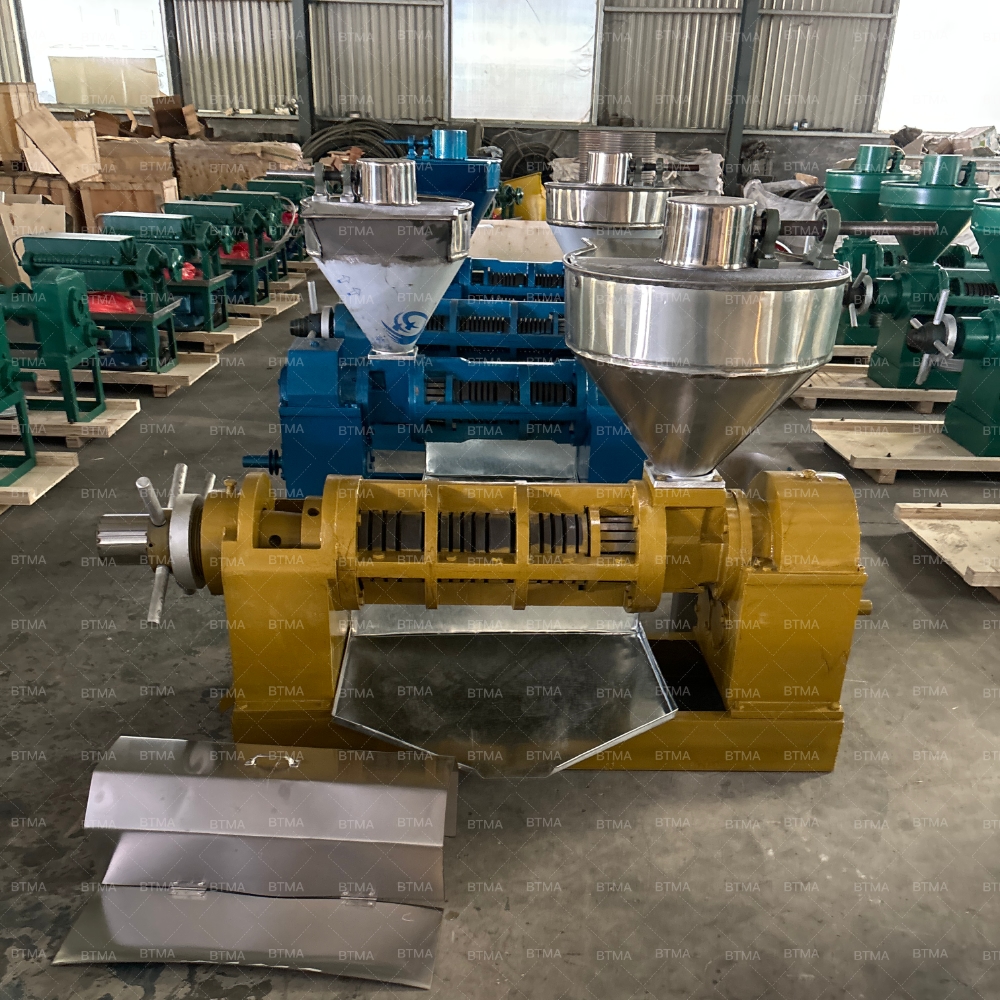
When choosing oil extraction equipment, many customers are unsure whether to choose a screw oil press machine or a hydraulic oil press machine. Both types of machines can extract oil from different oilseeds, but they have different working principles, production capacities, and application areas.
The best choice depends on your raw materials, production requirements, investment budget, and expected oil production scale. Understanding the differences between these two machines can help you select the right equipment for your oil processing business.
This article will compare screw oil press machines and hydraulic oil press machines from several important aspects, including working method, capacity, operation, and suitable applications.
Different Working Principles
A screw oil press machine uses a continuous pressing method. During operation, oilseeds enter the pressing chamber, where the rotating screw shaft gradually increases pressure to separate oil from the solid materials.
Because the feeding, pressing, and discharging processes happen continuously, screw oil press machines are suitable for customers who need stable production and higher processing efficiency.
A hydraulic oil press machine uses hydraulic pressure to press oil materials in batches. The machine applies strong pressure through a hydraulic system, allowing oil to be separated from the raw materials.
This pressing method usually requires loading and unloading materials manually, making it more suitable for smaller production volumes or specific oil extraction requirements.
Production Capacity Comparison
One of the biggest differences between screw oil press machines and hydraulic oil press machines is production capacity.
Screw oil press machines are designed for continuous operation and usually provide higher processing capacity. They are widely used in small and medium oil mills, commercial oil production businesses, and agricultural processing facilities.
Hydraulic oil press machines generally have lower capacity because they work with batch pressing. They are often selected by customers who focus more on small-scale production or specific oil quality requirements rather than high output.
For customers who need to process large quantities of oilseeds every day, a screw oil press machine is usually a more efficient choice.
Raw Material Applications
Both screw oil press machines and hydraulic oil press machines can process various oil-bearing materials, but their applications may be different.
Screw oil press machines are commonly used for materials such as peanuts, soybeans, sunflower seeds, rapeseeds, and other common oilseeds. They are suitable for continuous production because of their strong adaptability.
Hydraulic oil press machines are often chosen for materials that require gentle pressing conditions or smaller batch processing. Some customers prefer hydraulic pressing when they focus on maintaining specific oil characteristics.
The choice of equipment should be based on the type of raw materials you plan to process and your production goals.
Oil Quality and Pressing Method
Oil quality is another factor customers consider when selecting oil extraction equipment.
Hydraulic oil press machines usually operate at a slower speed and lower production rate, which can be suitable for customers who focus on traditional pressing methods or small-batch oil production.
Screw oil press machines provide continuous pressing and higher efficiency. With proper temperature control, raw material preparation, and filtration equipment, they can also produce high-quality edible oil.
In practical production, the final oil quality depends not only on the machine type but also on raw material quality, pressing conditions, and filtration methods.
Operation and Maintenance Comparison
Screw oil press machines are designed for continuous operation, so they are commonly used by businesses that need regular production. They require routine maintenance, including cleaning the pressing chamber, checking wearing parts, and lubricating moving components.
Hydraulic oil press machines have a different structure and working method. Their maintenance mainly involves checking the hydraulic system, oil pressure, and related components.
Both machines require proper maintenance to ensure stable performance. The easier operation and maintenance method depends on the user’s production environment and experience.
Investment and Business Application
Investment cost is also an important consideration when purchasing an oil press machine.
For small businesses that are just starting, a hydraulic oil press machine may be suitable because of its simple structure and lower production requirements.
For customers who want to build a commercial oil processing business, a screw oil press machine is often a better investment because it provides higher capacity and supports continuous production.
Although the initial investment may be different, customers should consider long-term production efficiency and operating costs instead of only focusing on the purchase price.
Screw Oil Press Machine or Hydraulic Oil Press Machine: How to Choose?
The right choice depends on your actual needs.
A screw oil press machine may be more suitable if you:
- Need continuous production
- Process larger amounts of oilseeds
- Want higher production efficiency
- Plan to develop a commercial oil business
A hydraulic oil press machine may be a better choice if you:
- Need small-batch production
- Have limited raw material supply
- Prefer a slower pressing process
- Focus on specific oil processing requirements
Conclusion
Both screw oil press machines and hydraulic oil press machines have their own advantages. A screw oil press machine is generally more suitable for continuous production and commercial oil processing, while a hydraulic oil press machine is better suited for smaller-scale or specialized applications.
Before choosing oil extraction equipment, customers should consider raw materials, production capacity, oil quality requirements, and future business plans.
Selecting the right machine can help improve production efficiency, reduce operating costs, and create a more successful oil processing business.