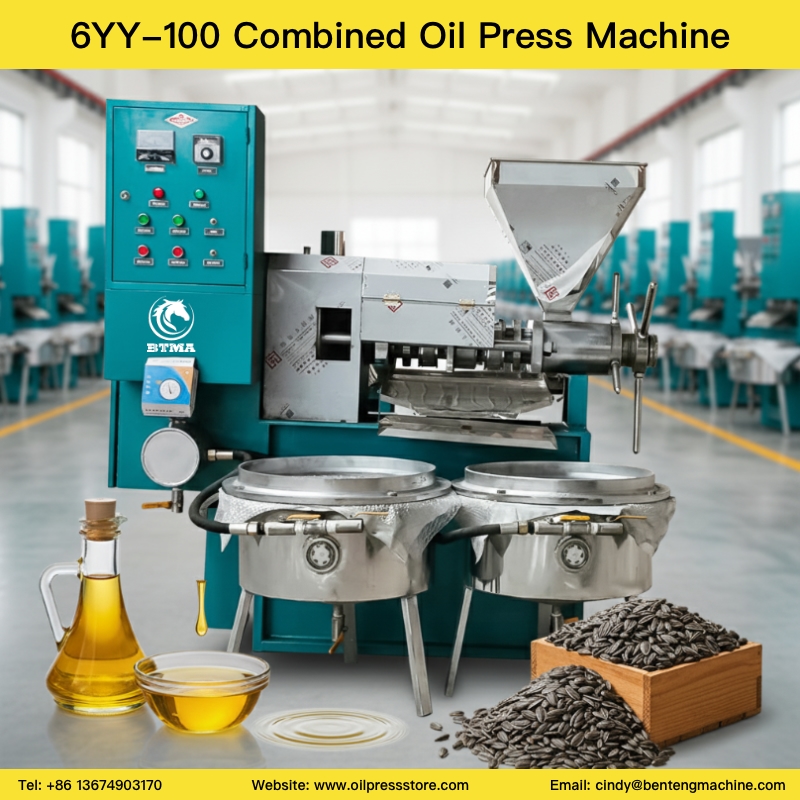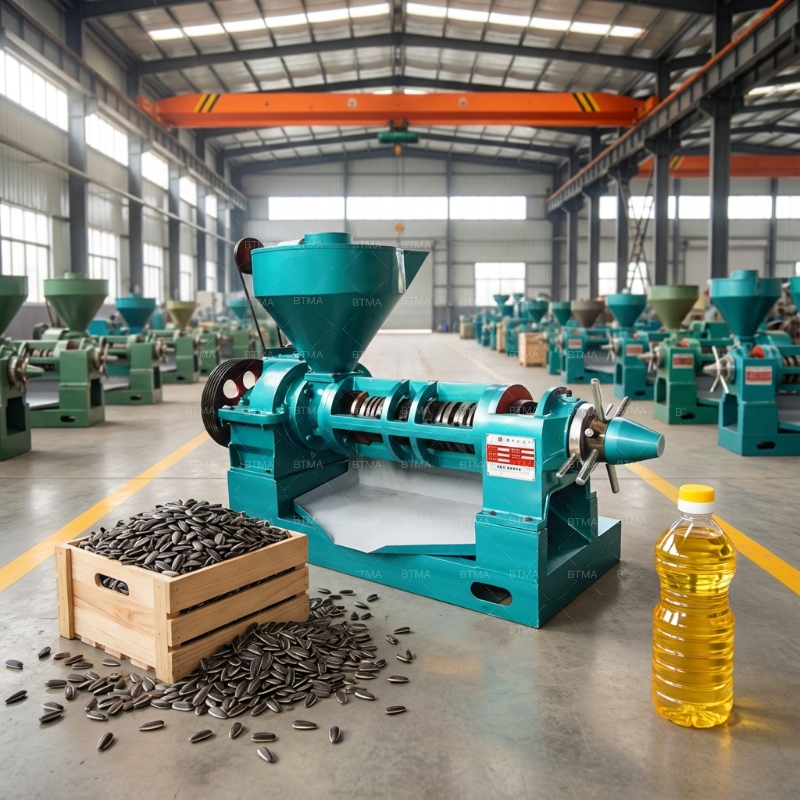
Good oil extraction starts before the oilseed enters the oil press machine.
Many new users focus on machine capacity, motor power, and price but overlook raw material preparation.
In actual production, the condition of the oilseed can have a major effect on feeding stability, oil extraction, press cake quality, machine wear, and overall production efficiency.
1. Start With Clean Raw Materials
The first step is cleaning.
Oilseeds should be screened to remove stones, sand, metal pieces, plant debris, and other foreign materials.
This is important for both product quality and machine protection.
Hard foreign objects can damage the screw shaft, pressing chamber, bearings, or other mechanical components.
A suitable cleaning machine or screening process can therefore be an important part of a commercial oil pressing line.
2. Remove Shells When Required
Some oilseeds may require shelling or dehulling before pressing.
Removing shells can change the proportion of kernel material entering the press and may improve the consistency of the pressing process.
However, not every raw material requires the same treatment.
The correct preparation method depends on the type of oilseed and the target oil extraction process.
3. Control Raw Material Moisture
Moisture is one of the most important variables in oil extraction.
If the material contains too much moisture, oil separation and cake formation may become unstable.
If it is excessively dry, the material may also behave differently during pressing and can increase operating difficulties.
There is no single moisture value that is ideal for every oilseed.
Peanuts, sunflower seeds, rapeseed, soybeans, and other materials have different characteristics.
Customers should establish the appropriate processing condition through the machine supplier’s recommendations and actual production testing.
4. Control Particle Size
Some oilseeds may benefit from crushing or other size reduction before pressing.
The purpose is to make the material easier to process and improve contact between the pressing components and the oil-bearing material.
However, excessive crushing can create too many fine particles.
The appropriate particle size depends on the raw material and oil press design.
5. Heating or Cooking May Be Required
Some oil extraction processes use heating or cooking before mechanical pressing.
Heating can change the physical properties of the material and may help improve oil release.
However, temperature should be controlled rather than increased blindly.
Excessive heating can affect oil quality and may change the characteristics of the press cake.
Always follow the processing recommendations for the specific oilseed.
6. Avoid Mixing Different Raw Materials Randomly
Different oilseeds have different oil content and processing characteristics.
Mixing materials without testing can make the pressing process difficult to control.
For commercial production, it is generally easier to establish a standard process for each major raw material.
For example, operators can record the preparation method and machine settings that produce stable results for each seed type.
7. Feed the Oil Press Consistently
Even well-prepared oilseeds can cause problems if the feeding rate changes constantly.
A stable feeding process helps maintain more consistent pressure inside the pressing chamber.
Operators should watch the material flow and avoid suddenly filling the hopper with excessive material.
8. Keep a Raw Material Record
For customers running an oil pressing business, keeping simple records can be extremely useful.
Record the type of seed, supplier or batch, preparation method, approximate moisture condition, production time, oil output, and press cake condition.
If the oil yield changes, these records help determine whether the cause is related to the raw material or the machine.
Better Raw Material Preparation Can Reduce Machine Problems
Correct preparation does more than improve oil extraction.
Clean material reduces the risk of foreign-object damage.
Stable moisture can improve feeding.
Consistent particle size can improve processing stability.
Proper pretreatment can reduce unnecessary mechanical stress.
For this reason, an oil press machine should not be considered separately from the raw material preparation process.
A complete oil pressing solution should consider cleaning, preparation, pressing, filtration, and oil storage as connected steps.
Choose the Machine Based on the Real Raw Material
When customers contact an oil press supplier, they should provide more information than simply asking for the machine capacity.
Useful information includes:
- Oilseed type.
- Expected production capacity.
- Raw material condition.
- Required working hours.
- Electricity or diesel availability.
- Desired oil filtration level.
- Available workshop space.
- Final oil application.
With this information, it is easier to select a suitable oil press and supporting equipment.
The right machine is not necessarily the largest machine.
It is the machine that matches the customer’s raw material, production target, budget, and operating conditions.