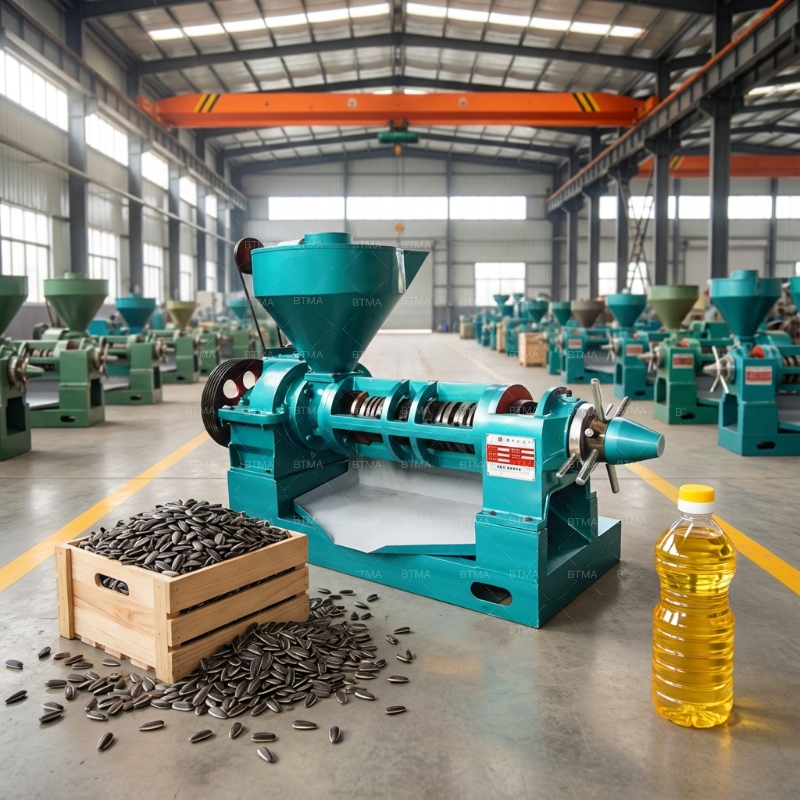
Choosing the right oil press machine is an important step when starting or expanding an oil processing business. Different customers have different production requirements, raw materials, and investment budgets, so there is no single machine that is suitable for everyone.
A small farm that processes a few hundred kilograms of oilseeds per day needs different equipment compared with a commercial oil production factory. Selecting a suitable oil press machine can help improve production efficiency, reduce operating costs, and ensure stable oil quality.
Before purchasing an oil extraction machine, customers should consider several factors, including the type of raw materials, required capacity, available power supply, production goals, and future business development plans.
Choose an Oil Press Machine According to Your Raw Materials
The first factor to consider when selecting an oil press machine is the type of oilseeds you plan to process. Different raw materials have different structures, oil contents, and pressing characteristics, which can affect the machine configuration and operating method.
Common oil-bearing materials processed by screw oil press machines include peanuts, soybeans, sunflower seeds, rapeseeds, mustard seeds, and other vegetable oil crops. Some materials require proper cleaning, crushing, or heating before pressing to achieve better oil extraction results.
For example, peanuts and sunflower seeds usually have good pressing performance after suitable preparation, while harder materials may require different adjustments during operation. Understanding the characteristics of your raw materials helps you choose the most suitable oil extraction equipment for your production.
Select the Machine Capacity Based on Your Production Requirements
Production capacity is one of the most important factors when choosing an oil press machine. Many customers focus only on the machine price but overlook whether the equipment capacity matches their actual production needs.
For small farms and local oil processing workshops, a small oil press machine with a capacity of around 50-150kg/h may be sufficient. These machines usually require less investment and are easier to operate, making them suitable for businesses that are just starting.
For customers who need commercial production, a medium or large screw oil press machine may be a better choice. Machines with higher capacity can process more raw materials in a shorter time and are more suitable for continuous oil production.
Before purchasing, customers should calculate their daily raw material supply instead of choosing a machine only based on hourly capacity. A suitable production plan can help avoid unnecessary investment or insufficient output.
Consider the Power Supply and Working Environment
The available power supply is another important factor when selecting an oil press machine. Different working locations may have different electricity conditions, so customers should choose a suitable power option according to their local environment.
Electric oil press machines are widely used in areas with stable electricity because they are convenient to operate and have lower daily operating costs. They are commonly selected for farms, workshops, and small oil production businesses.
In areas where electricity is unavailable or unstable, diesel-powered oil press machines can provide a practical solution. Diesel models allow users to operate equipment in remote agricultural areas without depending on the local power grid.
The working environment, available space, and transportation conditions should also be considered before selecting equipment.
Decide Between Screw Oil Press Machine and Hydraulic Oil Press Machine
Different oil extraction methods are suitable for different production requirements. Screw oil press machines and hydraulic oil press machines are two common types of equipment used for vegetable oil production.
A screw oil press machine is designed for continuous operation and is widely used for commercial oil extraction. It can process a large amount of raw materials continuously and is suitable for customers who need stable production.
A hydraulic oil press machine usually works with batch pressing and is often selected for small-scale production or materials that require lower temperature pressing. It can provide a different pressing method depending on the customer’s requirements.
When choosing between these two types of machines, customers should consider raw materials, required capacity, production method, and expected oil quality.
Consider Whether Additional Equipment Is Needed
An oil press machine is the main equipment in an oil production process, but some customers may need additional machines to improve efficiency and oil quality.
For example, a complete oil processing system may include seed cleaning equipment, oil press machines, and oil filter machines. Cleaning machines help remove impurities before pressing, while filter machines improve the clarity of the final oil.
For businesses that plan to sell edible oil commercially, adding suitable filtration equipment can help produce cleaner oil and improve the overall production process.
Choosing the right combination of equipment is often more important than selecting a single machine with the highest capacity.
Evaluate Maintenance Requirements and Spare Parts Availability
A reliable oil press machine should not only provide good production performance but also be easy to maintain. Regular maintenance directly affects the service life and working efficiency of the equipment.
Before purchasing, customers should understand the machine structure, wearing parts, maintenance requirements, and availability of spare parts. Components such as screw shafts and pressing parts may need replacement after long-term operation.
A machine that is easy to maintain can reduce downtime and help users keep stable production over a longer period.
Plan for Future Business Growth
Many customers start with a small oil processing business and gradually increase production as market demand grows. Therefore, future expansion should also be considered when choosing an oil press machine.
A machine that meets current needs while leaving room for future development can be a better investment. Customers can later add additional equipment or upgrade to a larger production system according to business growth.
Careful planning before purchasing can help avoid replacing equipment too frequently and reduce long-term operating costs.
Conclusion
Choosing the right oil press machine requires more than comparing prices or capacity numbers. Customers should consider raw materials, production requirements, power conditions, oil quality expectations, and future business plans.
The best oil extraction equipment is the one that matches your actual production needs and provides reliable performance. By selecting a suitable screw oil press machine or complete oil processing solution, businesses can improve efficiency and build a stable vegetable oil production operation.