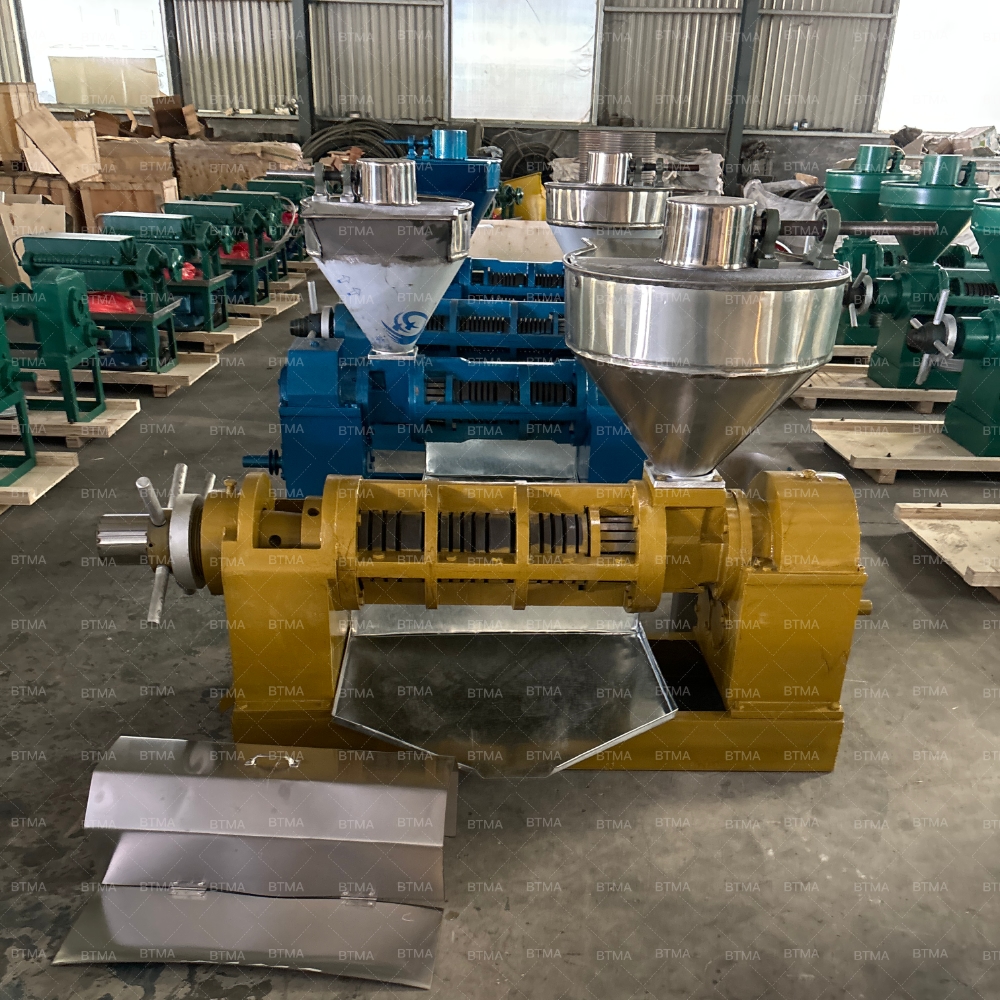
Electricity consumption is an important consideration when choosing an oil press machine. The purchase price is only one part of the total investment; daily energy costs also affect the profitability of an oil processing business.
The actual electricity cost depends on motor power, operating hours, electricity prices, and how heavily the machine is loaded. Understanding how to estimate energy consumption helps customers compare equipment options and plan their operating budgets.
How Is Electricity Consumption Calculated?
The rated motor power, measured in kilowatts (kW), provides a useful starting point for estimating electricity consumption. If a 7.5 kW motor operates at its rated electrical input for one hour, it would use approximately 7.5 kilowatt-hours (kWh) of electricity.
The basic calculation is:
Energy (kWh) =Power (kW) × Operating Hours
For example, if a machine has a rated power of 7.5 kW and operates for 8 hours, the estimated consumption at that input level is 60 kWh.
This is a planning estimate, not a guarantee of actual consumption. Motor loading, efficiency, start-up periods, and operating conditions affect the real figure. For a complete production line, the power consumption of all operating equipment should be considered.
Example of Daily Electricity Cost
Suppose a business operates a 7.5 kW oil press machine for 8 hours each day, and the electricity tariff is $0.15 per kWh.
| Item | Example value |
|---|---|
| Rated motor power | 7.5 kW |
| Daily operating time | 8 hours |
| Estimated daily energy use | 60 kWh |
| Example electricity tariff | $0.15/kWh |
| Estimated daily electricity cost | $9.00 |
The estimated cost is calculated as 60 × $0.15=$9.00.
Actual cost may differ if the motor does not continuously draw its rated input or if the machine experiences variable loads. Customers should use their local electricity tariff and measured operating data for a more accurate estimate.
What Affects an Oil Press Machine‘s Energy Consumption?
Motor power is only one factor. The raw material, feeding rate, pressing conditions, and mechanical condition of the machine can influence how much electricity is used during production.
If the machine is overloaded or incorrectly adjusted, it may draw more power or experience unstable operation. Worn components and poor maintenance can also affect efficiency.
For a fair comparison between machines, evaluate energy use alongside raw material throughput. A machine with higher power may process more material per hour, so electricity consumption per kilogram of raw material can be more informative than total daily consumption alone.
How to Reduce Operating Costs?
Choose an oil press machine that matches your production requirements. An oversized machine may increase investment and energy costs when raw material supply is limited, while an undersized machine may require longer operating hours to meet production targets.
Maintain the equipment according to the manufacturer’s instructions, avoid overloading, and monitor electricity consumption during normal production. If a complete line includes cleaners, conveyors, filters, or heating equipment, calculate their energy use separately and then combine the figures.
Should You Choose an Electric or Diesel-Powered Oil Press?
Electric models are practical where electricity is reliable and affordable. Diesel-powered models may be useful in locations where grid power is unavailable or unstable, but their fuel costs, maintenance requirements, and operating conditions should also be evaluated.
Compare the total operating cost rather than looking only at the motor power or purchase price. The best choice depends on local energy prices, production volume, and the working environment.
Conclusion
Estimating electricity consumption helps businesses understand the ongoing cost of operating an oil press machine. Begin with motor power and operating hours, then refine the estimate using actual measurements and local electricity prices.
For a complete oil processing operation, include the energy requirements of auxiliary equipment as well. A well-matched machine and an efficient production plan can help control operating costs without compromising production needs.