What Should a Commercial Oil Production System Include?
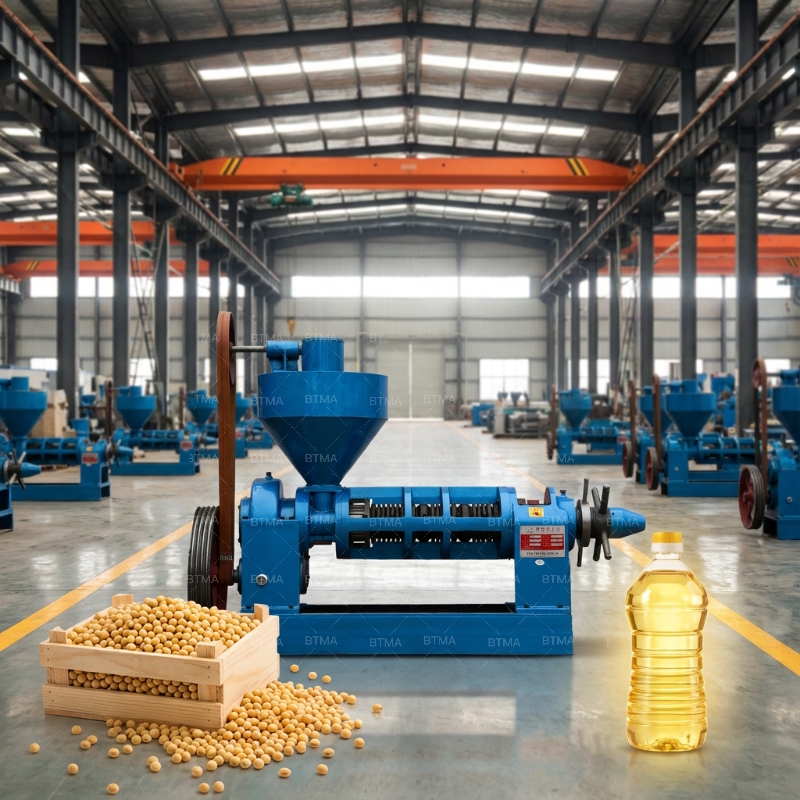
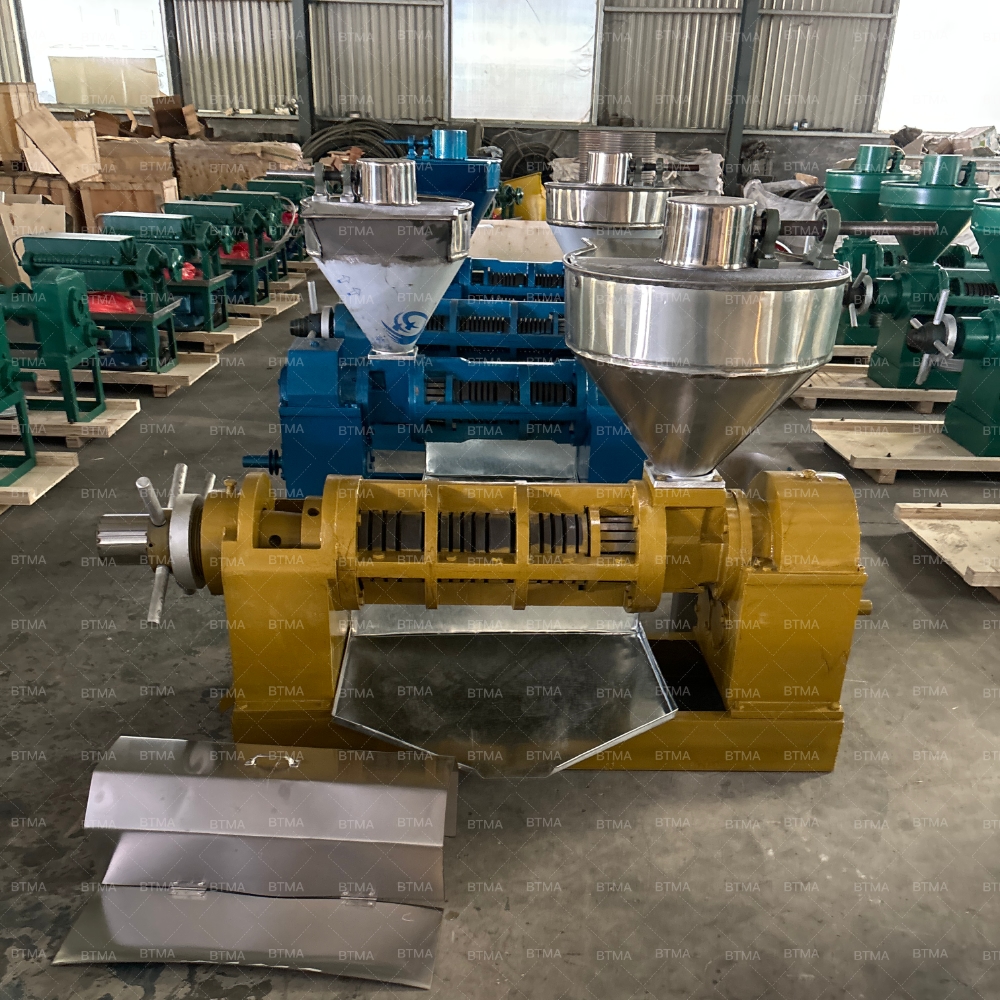
Moving from small-scale oil pressing to commercial production requires a more organized workflow. The business needs to handle raw materials, seed preparation, pressing, filtration, storage and packaging without creating unnecessary delays between each stage. This is why equipment selection should consider the entire production process rather than focusing only on pressing capacity. The 6YY-150 Combined Oil Press Machine integrates screw pressing, heating and vacuum filtration into one system, providing a compact solution for businesses that want to simplify the core stages of oil production. It can be considered by small and medium oil workshops that need more organized production but do not necessarily require a large industrial oil processing plant.
Why Is a Combined Oil Press Different From a Standard Oil Press?
A conventional oil press mainly focuses on extracting oil from prepared oilseeds, while filtration and other processes are usually handled separately. A combined system takes a more integrated approach by bringing several functions into one machine. With the 6YY-150 Combined Oil Press, pressing, heating and vacuum filtration can be arranged as part of the same production workflow, reducing the need to transfer freshly pressed oil between multiple independent machines. This can be useful when workshop space is limited or when the operator wants to reduce the amount of equipment that needs to be monitored during daily production. It also provides a more straightforward starting point for businesses developing a commercial oil-processing operation.
How Does Filtration Affect Oil Production Efficiency?
Oil pressing and oil filtration should be considered together because the output from one stage becomes the workload for the next. Freshly pressed oil can contain fine particles and suspended impurities, so filtration is necessary before the oil is transferred to clean storage or packaging. If a pressing machine produces oil faster than the filtration equipment can handle, the operator may need additional temporary storage or production interruptions. The integrated filtration system of the 6YY-150 Oil Press Machine helps connect these two stages more closely. For commercial users, this can make the production workflow easier to organize, although the final setup may still require additional tanks and supporting equipment depending on daily output.
Which Oilseeds Can Be Processed?
The 6YY-150 Combined Oil Press Machine can be used for a range of oil-bearing materials, including common seeds such as peanuts, soybeans, sunflower seeds and rapeseed. The current machine configuration can also be considered for grated coconut, mustard and pre-treated palm kernel. However, different raw materials have different physical characteristics, so preparation requirements are not always the same. Cleaning is generally important before pressing, while some materials may require crushing, moisture adjustment or other preparation. Businesses that plan to process several types of oilseeds should discuss the intended raw materials when purchasing equipment so that the machine configuration and production process can be properly matched.
How Should You Calculate the Required Production Capacity?
A common mistake when starting a commercial oil business is choosing equipment according to the highest advertised hourly capacity without calculating actual raw material availability. A better method is to estimate how much oilseed can be obtained every day and how many effective working hours are available. For example, if a workshop can consistently obtain 1,500 kg of oilseed per day and has six effective processing hours, the required average throughput is around 250 kg/h. The actual working capacity of the 6YY-150 Oil Press will depend on the specific raw material and operating conditions, so buyers should use their real production requirements rather than a theoretical maximum when planning the workshop.
What Equipment Is Needed After Pressing?
Even when an integrated oil press is used, a commercial workshop still needs an organized downstream process. Filtered oil should be collected in clean storage tanks before packaging, and the storage area should be designed to prevent contamination or accidental mixing between different types of oil. Businesses selling bottled oil may also need filling, capping, labeling and packaging equipment. If raw material cleaning is not already available, a seed cleaner may also be useful. The 6YY-150 Combined Oil Press Machine can serve as the central processing equipment, while these supporting machines complete the production system around it.
When Is a Combined Oil Press a Good Investment?
An integrated machine can be particularly attractive when a business wants to increase production efficiency without building a complicated production line. It is useful for workshops where floor space, labor and equipment coordination are important concerns. The 6YY-150 Combined Oil Press Machine provides a way to combine several core processes while leaving the business free to add storage, cleaning or packaging equipment as demand grows. For a large factory with highly specialized processing stages, separate machines may provide more flexibility. For a small or medium commercial producer, however, an integrated configuration can offer a practical balance between production capability and workshop simplicity.
How Can the Production System Be Expanded?
A commercial oil business should consider future growth when designing its initial workshop. If sales increase, the first bottleneck may not always be the oil press itself. Storage tanks, filtration, packaging or raw material handling can become limiting factors. For this reason, businesses using a 6YY-150 Combined Oil Press Machine should leave enough space for additional supporting equipment. Once the existing system is consistently operating near its practical capacity and raw material supply is stable, the business can consider adding another press or moving to a higher-capacity production line. Gradual expansion allows investment to follow actual market demand.
Conclusion
The 6YY-150 Combined Oil Press Machine is designed around a simple idea: make the main stages of oil processing easier to organize within one compact system. By combining pressing, heating and vacuum filtration, it can be considered for commercial workshops that want a streamlined production workflow without immediately installing a large industrial line. The final equipment configuration should still be based on the raw materials, expected daily production, available space and downstream processing requirements. With proper planning, a combined oil press can become the central part of an efficient small or medium-scale oil production business.
FAQ
What is a 6YY-150 Combined Oil Press Machine?
The 6YY-150 Combined Oil Press Machine is an integrated oil processing machine that combines screw pressing, heating and vacuum filtration for small and medium-scale oil production.
What raw materials can be processed?
It can be considered for peanuts, soybeans, sunflower seeds, rapeseed and other suitable oil-bearing materials. Certain configurations can also process grated coconut, mustard and pre-treated palm kernel.
Does the machine include filtration?
Yes. Vacuum filtration is integrated into the combined equipment configuration, helping connect the pressing and filtration stages.
Is it suitable for commercial production?
The 6YY-150 Oil Press is suitable for small and medium commercial oil-processing applications where an integrated workflow is preferred.
What should I confirm before ordering?
Confirm the raw materials, expected daily processing volume, electricity requirements, workshop space and desired production workflow before selecting the machine.